

How to Develop a Chatbot in 2025: Step-by-Step Guide with Tech Stack
Introduction: Why Chatbots Still Matter in 2025
In 2025, chatbots have become integral to modern digital businesses—from startups and e-commerce stores to large-scale enterprises. With the rise of conversational commerce, 24/7 customer service, and automation, a well-designed chatbot can significantly enhance your brand’s responsiveness, efficiency, and personalization.
If you’ve ever wondered how to build a chatbot from scratch, which tech stack to use, and how to train it—this guide covers all the essentials, updated for 2025.
See also: What is Chatbot? Chatbots tutorial for beginners
Benefits of Chatbot Development for Businesses in 2025
- Cost-Effective Automation: One chatbot can handle hundreds of tasks, replacing dozens of repetitive human interventions.
- Round-the-Clock Support: Always-on availability improves user experience and increases customer satisfaction.
- Actionable Customer Insights: Chatbots analyze user behavior, provide feedback loops, and improve over time using AI.
- Personalized Experiences: Bots can tailor suggestions, upsell products, and guide users based on preferences and history.
Types of Chatbots in 2025
Rule-Based Chatbots
- Logic-based bots using “if-then” scenarios
- Best for FAQs and predefined workflows
- Cost-effective and easy to maintain
- Suitable for small businesses or limited use cases
AI-Powered Chatbots
- Built using Natural Language Processing (NLP) and Machine Learning (ML)
- Can understand context, sentiment, and intent
- Self-learn from user interactions
- Ideal for enterprises requiring dynamic responses, multilingual support, and data-driven automation
Choosing the right type depends on your business goals, scale, and complexity.
Chatbot Architecture & How It Works
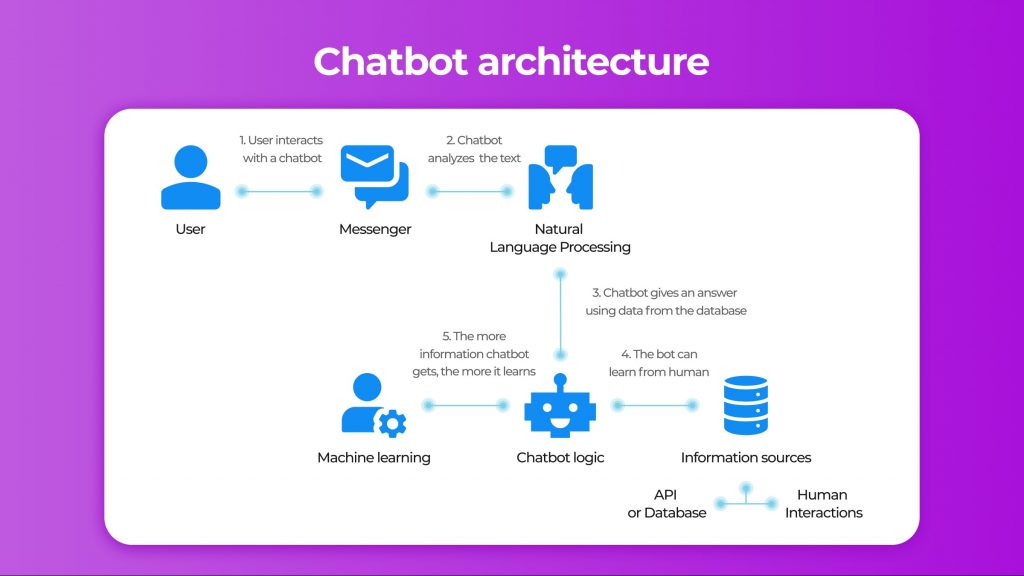
Core Components:
- User Interface (UI): The chat window where users interact
- Natural Language Understanding (NLU): Converts user input into intent
- Dialog Manager: Controls the flow of conversation
- Backend Integration: CRM, ERP, or third-party services
- Knowledge Base: FAQ data, product catalogs, etc.
- AI/ML Engine: For intelligent response generation and learning
In AI-powered bots, NLP and ML engines continually improve based on real-world data, making conversations more natural over time.
Integrating Chatbots with External Systems
To make your chatbot smarter and task-capable, integration is crucial.
Common Integrations:
- APIs – For connecting to internal tools, third-party services, or apps
- CRM (e.g., Salesforce, Zoho) – To fetch customer history or automate lead generation
- CMS (e.g., WordPress) – For content delivery
- Google Services – Use Google Sheets as a dynamic database or integrate with Calendar for appointments
With REST or GraphQL APIs, you can securely connect bots with any web-based or cloud-native system.
Chatbot Development Steps in 2025
1. Define Customer Needs & Business Goals
- Survey your target users
- Identify key use cases (e.g., support, lead gen, e-commerce)
- Outline pain points the bot will solve
- Prepare bot conversation flow maps
2. Choose the Right Platform
Select communication channels based on your audience:
- Web-based chat widget
- WhatsApp Business, Telegram, Slack, Microsoft Teams
- In-app chatbot for mobile apps
- Voice-enabled bots (e.g., Alexa, Google Assistant)
3. Hire Developers or Choose DIY Options
- Freelancers: Cost-effective but less reliable
- In-house team: Full control, higher costs
- Outsourcing partner: Scalable, affordable, expert-led
- No-code platforms: Best for MVPs or small projects
4. Choose the Right Tech Stack
Here’s a curated tech stack for chatbot development in 2025:
Front-End/UI
- React.js or Vue.js (Web UI)
- Flutter or React Native (Mobile UI)
NLP & AI Tools
- Google Dialogflow CX (Advanced AI with cloud support)
- OpenAI GPT-4 or GPT-5 API (for generative responses)
- Rasa (Open-source NLP engine)
- Microsoft LUIS (Language Understanding Service)
Backend
- Node.js / Python (Flask or FastAPI)
- MongoDB / Firebase / PostgreSQL
- Redis (for fast session management)
Integration Tools
- Zapier / Make (Integromat)
- REST or GraphQL APIs
- Twilio, WhatsApp Business API
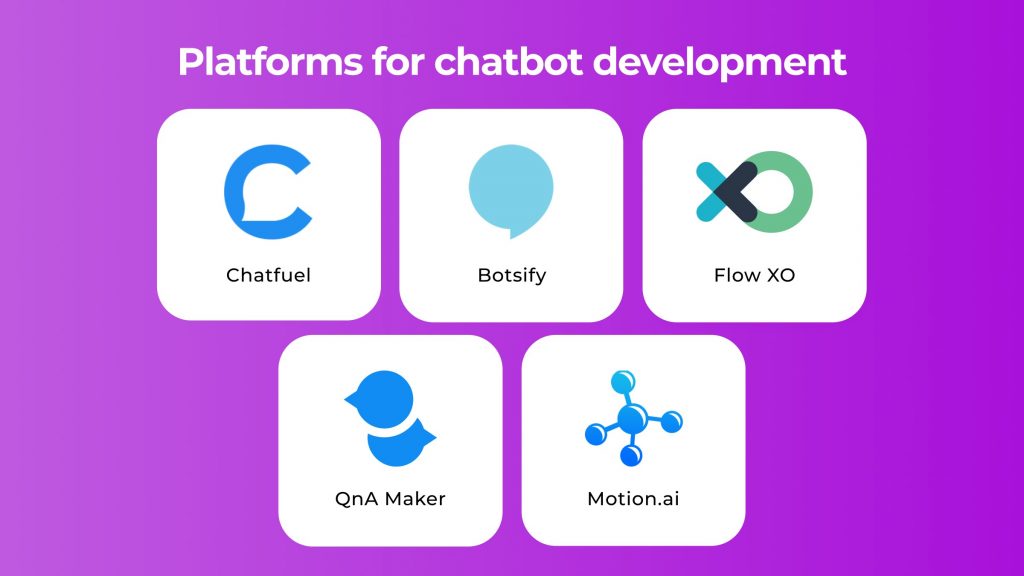
Popular Chatbot Builders in 2025
If you’re not ready for custom development, try these tools:
| Tool | Best For | Features |
|---|---|---|
| ChatBot.com | SMBs, websites | Templates, integrations, visual builder |
| Landbot | Conversational landing pages | Drag-drop editor, CRM sync |
| ManyChat | Facebook & Instagram | E-commerce automation, abandoned cart |
| Botsify | Education, customer service | Multi-language, custom branding |
| Tidio | E-commerce stores | Live chat + AI chatbot in one |
Teaching & Training Your Chatbot
Creating an AI chatbot is only the first step. Training is essential to make it human-like.
Training Phases:
- Intent recognition: Teach the bot how to classify user inputs
- Entity extraction: Identify key values like dates, product names, etc.
- Response generation: Map intents to helpful, context-aware replies
- Feedback loops: Use user feedback and analytics to refine responses
💬 For multilingual bots, training with language models and regional datasets is key.
Testing and Launching the Chatbot
- Use test scripts for various use cases
- Include edge cases (e.g., slang, typos, emoji responses)
- Deploy in beta to limited users
- Track performance metrics:
- Response accuracy
- Fallback rate
- Completion rate
- Session time
Post-launch, track KPIs and keep refining bot behavior monthly.
Bonus: Chatbot Trends in 2025
- Voice-enabled bots becoming standard in customer care
- GPT-powered assistants with creative and context-aware replies
- Emotion detection AI to improve sentiment-based responses
- Hyper-personalized marketing bots via CRM & behavior tracking
- IoT chatbot integration for smart device control
Conclusion: Should You Build a Chatbot in 2025?
Absolutely. A chatbot in 2025 is not just a tool—it’s a smart digital assistant that elevates customer experience, automates operations, and gives your business a futuristic edge.
Whether you’re a startup, mid-sized firm, or enterprise—investing in chatbot development today will save costs, improve service, and unlock new engagement opportunities tomorrow.
See Also:
- How Chatbots Improve Business Productivity
- What is Artificial Intelligence in Simple words with Examples
Stay Connected
Subscribe to our YouTube Channel for AI & IoT tutorials.
